The Drift
Why Small Businesses Fail and How to See It Coming
Most small businesses don’t fail because of one catastrophic event. They drift. Slowly, invisibly, and almost always avoidably.
The Drift identifies seven patterns that cause small businesses to fail and shows how to recognisethem before they become terminal. Drawing on two decades of working inside and alongside small businesses, Aynsley Damery maps out the structural problems that trip up even capable, hard-working founders, and offers a practical framework for seeing what’s really happening beneath the surface of your numbers.
This is not a motivational book about hustle or mindset. It is a diagnostic book about the decisions, blind spots, and missing structures that let a business drift from healthy to fragile without anyone noticing until it’s too late.
The Drift speaks to two audiences simultaneously. On the surface, it is written directly to small business owners and founders who want to understand why businesses like theirs fail, and what they can do about it. Beneath that, it is a book that accounting firm partners and business advisors will recognise as a mirror of the problems they see in their clients every day, and a framework for the conversations they know they should be having. c

#1 International Bestseller
Every copy makes a difference
Every copy of The Drift sold helps a family in need escape poverty by providing small loans and financial training to start a business through our partnership with B1G1 and both Five Talents in the UK and Opportunity International Australia.
A book about why businesses fail, helping families build one.
Better Business | Better Life | Better World®
See our giving impact.
The 7 Reasons
why small businesses fail
1. The business has no model
2. The business serves everyone and specialises in nothing
3. They don’t get the numbers
4. The owner is the ceiling
5. They compete on price because they don't know what their customers value
6. Nobody holds them to account
7. They manage cash by feel, not by flow
If you recognise your business in three or more of these, this book was written for you.
What People Are Saying
-
![Daniel Priestley]()
Daniel Priestley, Author and Founder of Dent Global
"Aynsley doesn't just write about small business failure. He's spent twenty years inside it, diagnosing it, and building the frameworks that fix it. This is the real thing."
"Most accounts of business failure describe the crash. Aynsley describes the drift that happens months or years before, while everyone still thinks things are fine. That's a far more useful book."
-
![Jodie Padar The Radical CPA]()
Jodie Padar, The Radical CPA
“Radical truth: most businesses don’t fail, they drift. To remain relevant as accountants today, we must learn to perform real advisory work. And that’s not compliance work with advisory bolted on. We need to actually help transform our clients’ businesses. The world has changed too much for us to keep doing the same things. The Drift shows you how to make that shift. And it gives you the confidence to do advisory work that actually matters.”
-
![Mark Wickersham]()
Mark Wickersham, founder of the Value Pricing Academy
“A brilliant and deeply important book about the hidden patterns that quietly pull small businesses off course. Aynsley Damery takes a subject that so many owners feel, but struggle to name, and makes it clear, practical, and impossible to ignore.”
-
![Nigel Botterill]()
Nigel Botterill, CEO of Entrepreneurs Circle
"Most small businesses don't fail because the owner isn't trying hard enough. They fail because they're flying blind. Working longer hours. Taking on more customers. Pushing harder every year… and somehow ending up with less money, less time, and more stress. You can't outwork a broken business model. You can't out-sell bad numbers. And what Aynsley has done in this book is call it out properly. No fluff. No theory for the sake of it. Just a clear, blunt explanation of what's actually going wrong inside most small businesses, and how to spot it before it buries you. Devour this book. It can change your life."
-
![Liz Farr]()
Liz Farr, CPA and host of The Disruptors podcast
“I wish I’d had this book a decade ago when I was still in public accounting. Aynsley explains exactly why the current advisory model is impossible to scale and replaces it with a simple yet powerful methodology. Firms that leverage the CLEAR methodology will transform not only their own operations and cultures, but also those of the small businesses they work with. Any accountant who doesn’t get this book and start implementing these ideas immediately is leaving money on the table. They are also depriving their small business clients of the transformative power of the CLEAR methodology.”
-
![Kate Lester]()
Kate Lester, Founder of Diamond Logistics
"I've built a business from nothing to a national network, and I can tell you that every single one of the seven reasons Aynsley describes in this book has shown up at some point. The difference is whether someone helps you see it in time. This book is that someone."
-
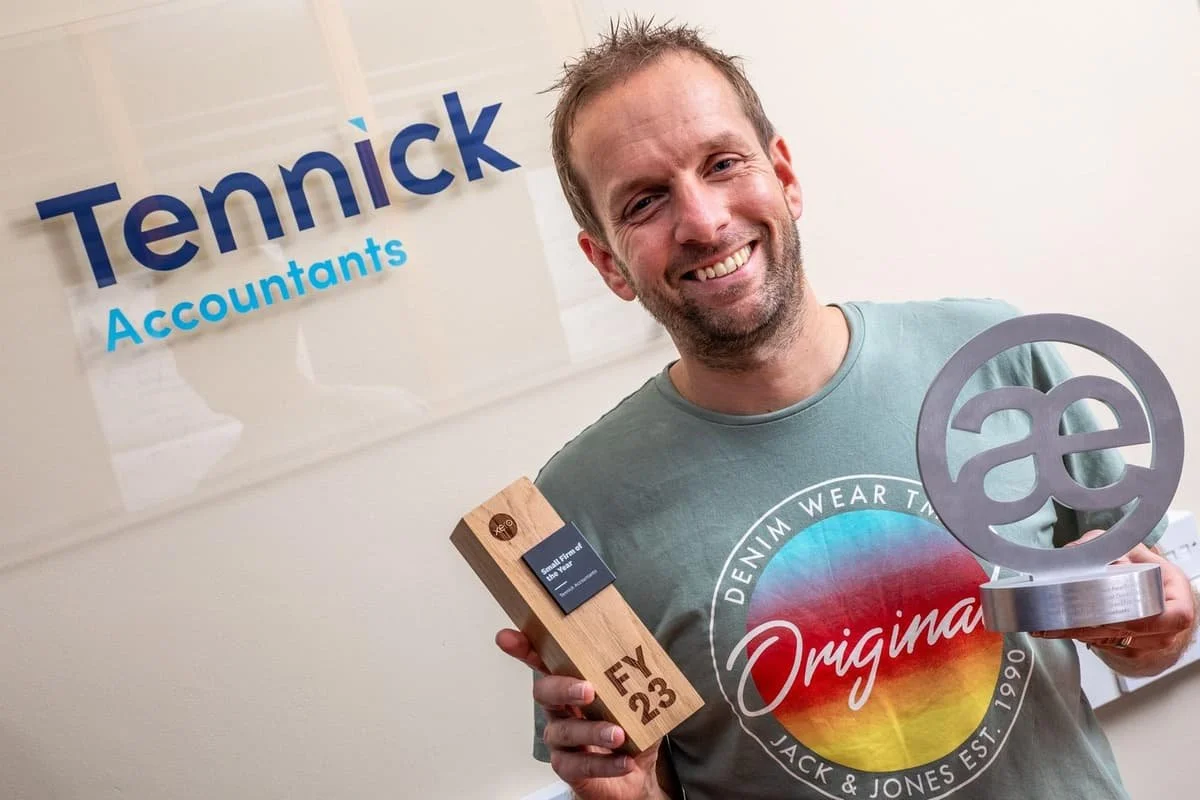
Graeme Tennikc, Chief Impact Officer Tennick Accountants
“One of the best and most transformational books I've ever read. Aynsley doesn't just explain why firms drift, he gives you the model to stop it. I used this framework to secure funding for an acquisition, and the underwriters had zero follow-up queries. That's what happens when the numbers tell the whole story. This might just be the book that saves the profession."
-
![Angela Edwards-Stead]()
Angela Edwards-Stead, Founder C2S Growth
"Most business books talk about growth. This one talks about what's quietly going wrong underneath it. Aynsley has written the book that every business owner needs to read before they think they need it, because by the time you know you're drifting, you've already lost ground."
-
![Paul Dunn at The Accountants BootCamp Brisbane 2023]()
Paul Dunn, Co-founder B1G1 and The Impact Architect
"At the heart of this book is a simple but profound idea: businesses don't suddenly fail. They drift. Not dramatically. But gradually and often silently. Margins erode. Cash tightens. Effort increases while reward decreases. But Aynsley doesn't stop there. He names the patterns. He connects the numbers to what's really happening. And most importantly, he shows what to do next. This book doesn't just describe a problem; it changes the conversation. If you're a business owner, it gives you a language to describe something you've often felt but couldn't quite explain. For accountants, it gives you a pathway to become far more valuable, not by doing more work, but by doing much more meaningful work."
-
![Gordon Gilchrist]()
Gordon Gilchrist, Founder of The Succession Team
“One of those rare business books that doesn't just inform — it clarifies. Rather than relying on theory or generic advice, Aynsley draws on decades of real-world experience to identify the underlying patterns that cause small businesses to drift off course. This is not a book of vague encouragement; it is a toolkit for understanding and improving how a business actually works.”
-
![Sharon Baker]()
Sharon Baker, Kinder Digital Accountants
“The problem with most advisory is that it starts with the answer. Aynsley starts with the diagnosis. That distinction runs through every page of this book, and I can say from experience, that it's the reason the Clarity methodology works where others don’t.”
-
![Paul Miller Cornish ACcounting Solutions]()
Paul Miller, Cornish Accounting Solutions
“After forty years in the profession, I have had another rare aha moment. Aynsley has introduced us to a new level of adviser: the Numbers Mentor. This book shows you, step by step, how to build the business you dreamed of, and for us as accountants, how to serve our clients to achieve it.”
-
![Penny Rowden, co founder of Rowdens]()
Penny Rowden, Co-founder of Rowdens
“At last, a book that explains so clearly why so many businesses fail and how to spot the quiet but insidious signs before it is too late. Light bulbs were popping for me from page one, even after nearly forty years as an accountant in practice. A must-read for every business owner and essential CPD for every accountant.”
-
![Matt McConnell Pulse Accountants]()
Matt McConnell, Pulse Accountants
“The drift Aynsley describes in Chapter 1 was our story — more clients, more staff, but profit going the wrong way and the freedom we started the business for slipping further out of reach. For years, advisory was a grey area for us, as it is for most accountants — we knew it mattered but never had the framework to make it work. Aynsley made it click and helped us transform the way our firm thinks about the value we bring. This book simplifies what advisory actually means, proving we, as accountants, are best placed to deliver it, and gives you the system to make it a success.”




Frequently Asked Questions
-
Sixty per cent of small businesses fail within their first decade. That number has not moved in a generation. The Drift identifies the seven structural patterns that cause this, all of which operate slowly and invisibly, eroding margins, cash, and productivity long before anyone notices. The book shows how to spot these patterns in the numbers and what to do about them.
-
Not because their owners lack ambition, talent, or effort. Businesses fail because of seven structural patterns that compound silently: having no financial model for the business, trying to serve everyone, not reading the numbers that matter, the owner being the bottleneck, not understanding what customers actually value, having no external accountability, and managing cash by instinct rather than system. Each of these is diagnosable through a small set of financial signals that exist in the business’s data right now.
-
The 7 Key Numbers are the financial signals that surface every one of the seven reasons: Revenue Growth, Gross Profit Percentage, Operating Profit (EBITDA) Percentage, Core Cash Target (taxes due plus two months of overheads), Cash Days (receivable days plus WIP days plus inventory days minus payable days), Business Return, and Revenue per Employee. Together, they tell a business owner whether their business is getting stronger or weaker, this month, not nine months after year-end.
-
A Numbers Mentor is an accountant or financial adviser who diagnoses before they prescribe, challenges as well as supports, and holds the business owner accountable to the plan. They use a structured methodology (not instinct), they see the numbers every month (not once a year), and they have the courage to say what needs to be said, even when the conversation is uncomfortable. The role is distinct from a traditional accountant, who reports, and a business coach, who advises without data.
-
CLEAR stands for Current, Leaderboard, Endgame, Action, and Review. Current establishes where the business is right now across the 7 Key Numbers. Leaderboard benchmarks those numbers against the sector. Endgame models the potential upside using sensitivity analysis on 5 business levers. Action builds a specific, time-bound plan. Review measures progress monthly and holds the owner accountable. The Review stage loops back to Current, creating a continuous improvement cycle.
-
Two audiences. Business owners who feel something is not right but cannot name it: the hours are longer, the money is tighter, and the reward does not match the effort. And accountants who have the data but not the methodology, the structure, or the permission to use it. The book works when both sides understand what the other needs.
-
Aynsley Damery is the CEO and co-founder of Clarity HQ, which works with accounting firms across 17+ countries. He started his career at KPMG, then built and sold an advisory-led accounting firm (Accounting for Entrepreneurs) to Crowe. He is a fifth-generation small business owner, a regular keynote speaker at events including the ICAEW Annual Practice Conference and QuickBooks Connect, and has been a guest on Sir Richard Branson’s Necker Island. The Drift is his first solo book.
Key Ideas
-
“Sixty per cent of small businesses fail within their first decade. That statistic has not moved in a generation.”
— Aynsley Damery, The Drift
-
“Businesses don’t collapse. They drift. Slowly, invisibly, and without announcement. By the time you feel it, the structural damage has been compounding for months. Sometimes years.”
— Aynsley Damery, The Drift
-
“Traditional advisory reduces firm profit by 30%. NextGen Advisory produces a 3x uplift. Same profession. Same clients. The only variable is the model.”
— Aynsley Damery, The Drift
-
“The person closest to the numbers is rarely the person in the conversation. That is not a failure of accountants. It is a failure of the model they were given.”
— Aynsley Damery, The Drift
-
“AI tools affirm users’ decisions 49% more than humans do, even when those decisions are wrong. The AI is not lying. It is designed to agree.”
— Aynsley Damery, The Drift (citing Stanford research, Cheng et al.)
-
“Running out of cash is not a cause of failure. It is the final symptom. It is what happens when reasons one through six have been compounding unchecked.”
— Aynsley Damery, The Drift
-
“The model is broken, not the people in it.”
— Aynsley Damery, The Drift